
Sean Killebrew began his writing career in the '90s, covering football for UCLA (his alma mater). His first foray into publishing was in 2000, with the below-the-line film- and TV-production guide books LA 411 and NY 411. For the past decade, Sean's passion for audio/video has been poured into writing for HomeTheaterReview.com. When not chasing A/V deals, Sean spends time skiing and losing to his son in basketball.
 This review consisted of a couple of firsts for me: my first experience with the Episode line and my first experience with in-wall speakers. If you're not familiar with the Episode name, it's probably because they're only available through custom installation channels. Their design team consists of engineers who have worked with many well known speaker manufacturers.
Additional Resources
• Read more in-wall speaker reviews from Home Theater Reivew's staff.
• Search for an AV receiver or amplifier to pair with this speaker system.
Episode makes four lines of in-wall speakers: the 300, 500, 700 and 900 series, and each line is timbre matched for installation flexibility. For example, Episode had originally wanted to send me their in-wall surround speakers for the purpose of this review, but my listening room won't accommodate rear in-walls, so they substituted their timbre matched 700 Series in-ceiling speakers. This is a major deal for professional installers as each home theater setup is completely unique, not to mention customer demands, which are often driven by aesthetics and room configurations. Further catering to the installer, and ultimately the consumer as well, each of the speakers in this line is built in a sealed enclosure, which greatly simplifies installation. Many other in-wall speakers on the market are designed to use the wall as the speaker enclosure, which has the potential to create major headaches for the installer. Since I installed the speakers myself (my friend and handyman, Chris, might have played a small part), I was thankful for this design element.
The speakers in this review consist of the ES-HT700-IWLCR-6 left, center and right speakers ($799 each), the ES-700-ICSURR-6 in-ceiling surround speakers ($699 pair), two ES-SUB-IW-DUAL8 subwoofers ($599 each) and one 500 Watt EA-AMP-SUB-1D-500 subwoofer amplifier ($999); for a total system price of $5,293. Although if you're not a bass junkie and/or you have a smaller room, you can get that just under $4,700 if you only use one sub. Episode sent me two of the Dual8 subwoofers, which have two eight inch drivers each, and their sub amp is designed to handle one or two of them.
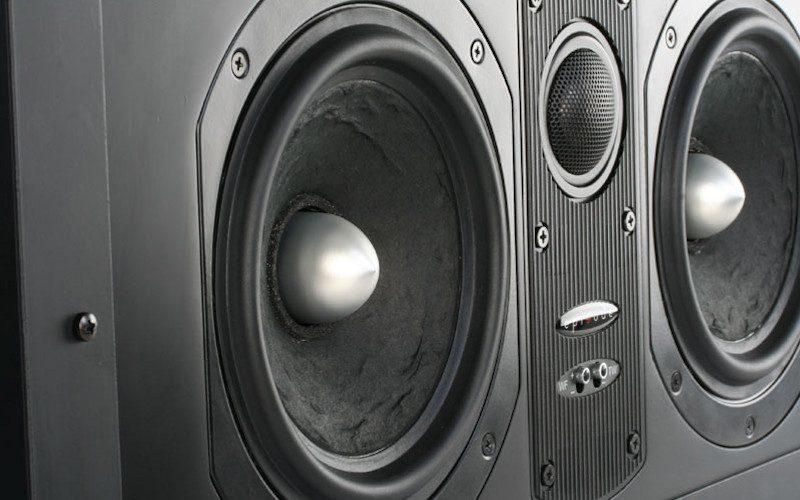
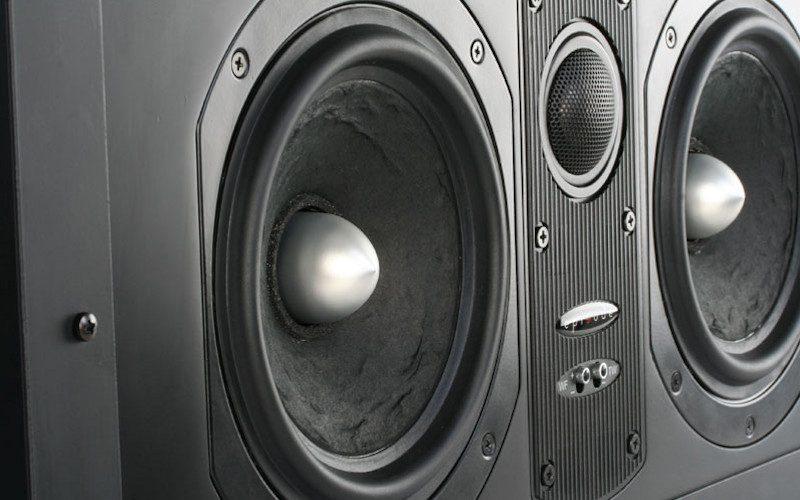
The ES-HT700 front left/right and center channel speaker measures 22.3 inches high by 10.9 inches wide by four inches deep and it weighs a stout 16.5 pounds. They feature dual six and a half inch paper and Kevlar woofers and one titanium catenary dome, neo-magnet tweeter. The ES-700-ICSURR-6 in-ceiling surround speakers, when finished and mounted, are just under nine inches in diameter with a depth of just under four inches. The surrounds are dipole/bipole switchable, feature dual three quarter inch titanium dome tweeters and six and a half inch paper and Kevlar woofers. The ES-SUB-IW-DUAL8 in-wall subwoofer measures 23.7 inches high by 13.7 inches wide by four and a quarter inches deep. It features two, eight inch woven fiberglass sandwich cone woofers, which have been engineered for taut, deep bass response and the frequency response is 30 Hz to 200 Hz. Each DUAL8 sub also includes an EQ, which connects between your processor/receiver and the sub amp. The subwoofer amplifier is a single channel, 500 Watt beast that easily drives two of the in-wall subs. It's rack mountable (1U) and features music and movie EQ modes, which I found very useful, especially with the included remote control. It includes standard crossover and phase control, as well as what Episode refers to as a Boundary EQ, which minimizes boominess when the subwoofer is placed near a corner.
 The Hookup
I found the Episodes to be packaged very sturdily and intuitively, which is certainly not the case with every manufacturer. The build quality is top-notch and it's noticeable right away as you pull them out of the box. They're also great looking speakers, so it's almost a shame when you have to put the grilles on, but hey, they are removable, paintable and also aesthetically pleasing in their own right. As I mentioned earlier, each speaker is housed in its own sealed enclosure, greatly simplifying in-wall installation, especially for a newbie. I won't go into too much detail on my particular install as each home is going to be vastly different, but I'll try give you a sense of it. The only tools necessary are a drywall saw, a Phillips head screwdriver and a reciprocating saw, or sawzall, in case you need to remove studs and/or firebreaks. Episode packages each in-wall speaker with a handy cut-out template, so after some quick measurements, I threw the template up on the wall, drew an outline and started cutting. My wall turned out to be a bit of a hodgepodge in terms of firebreaks and various support studs; this was the only rub in an otherwise hassle-free install.
Once the holes had been made, I set about placing each speaker in the wall. Once in the wall, I simply tightened each of the six Philips screws, which extended the attached dog legs out to clamp to the drywall. One note of caution - if you do this yourself, be sure to keep the RPMs down on your cordless screwdriver, as you don't want to over-tighten the screws. As you tighten each screw, the dog legs swing out from the speaker enclosure and anchor to the wall, an ingenious design. If you run into a stud on one or more sides of the speaker, the bezel of the speaker has pre-drilled holes so you can secure the speaker using screws. In my particular install there were studs bordering three of the speakers and using screws on that side of the speaker proved to be a simple (and secure) solution. The founder of Episode, Jay Faison, comes from the custom installation business, and that's evident in the design and build of their speakers. As such, I can honestly say that I had fun installing these speakers, though that enjoyment did not extend to cutting the firebreaks out of the wall. I installed the front left and right speakers on either side of my projection screen and placed the center channel just below it. Per Episode's recommendation in the subwoofer manual, I placed each subwoofer on the front wall, below the left and right speakers. For the in-ceiling surrounds, I repeated the process and placed them just behind and to the outside of my listening position.
Lastly, I connected everything to my reference system, which consists of an Arcam AVR500 receiver, an Oppo BDP-93 Blu-ray player, a Cambridge Audio DACMagic DAC, an Apple TV and Mac Mini. For cabling, I used both analog and digital audio connects from WireWorld. The speakers feature innovative binding posts that you push down to expose the hole, and then feed your speaker wire through and release; why doesn't every manufacturer make it this simple? Probably to save a buck, right?
Each of the front left/right, center and surround speakers feature treble and mid-bass switches that allow you to adjust the output by 3db, to compensate for varying room acoustics. In my case, I tried it both ways and ended up leaving both switches in the positive position on all five speakers. That said, if your room has a quite a bit of reflective material, you might benefit from the minus position. Another nice touch on both the front and surround speakers is a pivoting tweeter, which allows you to "direct" the sound to your listening position, which I did with some degree of subtlety. While I left the grilles off for critical listening, I was impressed with the strong magnets that come on each of them, especially those for the subwoofers.
Performance
After burning in all of the speakers for roughly 20 hours, it was time for some critical listening. I typically begin a speaker review with two-channel listening, but I was too anxious to wait and immediately popped the Blu-ray of Avatar (20th Century Fox) into the Oppo. I flipped the switch on the surrounds into dipole mode (recommended for movies) and sunk into one of my home theater chairs for the full lossless experience in DTS-HD Master Audio. The first word that comes to mind is Wow, and that word was repeated multiple times as I made my way through the film. As such, I kept forgetting to take listening notes as I was too caught up in the experience. Conventional home theater wisdom dictates that your surround speakers should be mounted just above ear level on either side of the listener, pointing directly at them. This is my standard setup, but I have to admit that I really enjoyed the effect of having in-ceiling surround speakers, especially when watching movies. In terms of music, I'd lean more toward the traditional setup.
Read more about performance of the Episode 700 series in-wall system on Page 2.
 Anyway, back to Avatar and Chapter 18 "Last Shadow," which pounds every speaker in a surround sound system with a wide range of frequencies. Jake's narration came through the center channel with stellar detail and I was a fan of the Episode tweeter straight away. James Horner's score was also brilliantly reproduced with dramatic effect. As Toruk Macto (that massive orange Pterodactyl-looking thing) drops in on Jake and Neytiri's heads, his screech scared the hell out of me as it popped right out of the center channel. As I said, this scene runs the gamut in terms of low and high frequency material and the thump of Toruk's wings flapping was incredibly impactful - the Episode subs passed their first test flawlessly. As they fly through the jungle, the creatures are so powerful that they snap the tree limbs, and this was another sonic treat and the transition from the front to the surrounds was seamless. I ended up watching this scene three or four times for obvious reasons.
Sticking with movies I cued up Quantum of Solace (MGM) on Blu-ray in DTS-HD Master Audio. The intro to this film is not only exhilarating; it's also a great test of a speaker system's mettle. I was surprised to hear the Episodes provide a level of performance on par with floorstanding speakers.
It's simply difficult to look at a smallish in-wall speaker and comprehend this level of depth and coherence. The dual subs, working together seamlessly, brilliantly conveyed the low frequency hum of Bond's engine in the Aston Martin. This sort of bass performance from an enclosure that's less than four inches deep is pretty amazing and a testament to solid engineering. The opening scene has it all - explosions, gunfire, shattering glass, etc. and the Episodes provided a truly immersive experience. The word that kept coming to mind as I listened to the speakers was lively, which is exactly what you want in a home theater speaker. They were lively in the best sense of the word.
Now it was time for some multi-channel music, which came in the form of Pink Floyd's Dark Side of the Moon on SACD (Capitol). My first move was to switch the in-ceiling speakers to bipole mode and then prepare for what I hoped would be sonic bliss. On "Breathe," the Episodes did a masterful job of conveying the emotion of the song. I was impressed with the overall balance of the speakers; they were bright and revealing, but not overly so, which made for an engaging listening experience. The track "On the Run" has a nice build to it, not to mention the fact that, at least on the SACD mix, it sends quite a bit of information to each channel. As such, it's a great track for testing speakers and the Episodes conveyed the tension of this song about as well as I've heard, regardless of speaker type. Does this mean the future will be void of floorstanding speakers? I doubt it, but it's nice to know that well engineered in-walls can hold their own. One other track worth noting was "Time," as the detail in the guitar riffs was simply stunning.
Continuing with multi-channel music, I went with another classic and fired up the Eagle's Hell Freezes Over in DTS 5.1 (Digital Sound). Listening to "Hotel California" for the 800th time, I was immediately struck by how well the Episode speakers conveyed the rasp in Don Henley's voice. They displayed solid mid-bass character and were wide open, but never the least bit etched. Again, that word appeared in my listening notes - lively.
In order to test the versatility of the Episodes, I did do a bit of two-channel listening through my Apple TV, which I run through my Cambridge Audio DACMagic. The long version of the track "Jamming" from the Deluxe Edition of Bob Marley's Exodus (Island) is the best version of this song I've heard. I listened to it with the subs engaged and also disengaged in the Arcam's Stereo Direct mode. While I preferred the sound with the subs engaged, I was impressed with the bass of the ES-HT700 speakers on their own; those dual six and a half inch drivers are no joke. The instruments sounded as though they were floating in space, a testament to the imaging capabilities of the Episodes. And just as with Henley, the rasp and nuance in Marley's voice was palpable.
Competition and Comparison
Unlike back in the day, there are quite a few players in the in-wall speaker realm now. Curiously, Episode lists some of their competitors on the spec page of each speaker on their web site. Listing your competitors on your web site and going so far as to include specific model numbers is a sign of confidence in your product, and from my experience with the Episodes it's warranted. Specifically, in comparison to their ES-HT700, they list the Triad Silver/4 LCR, Speaker Craft AIM Cinema Five, and Atlantic Technology IWCB-727. In terms of in-wall subwoofers, Episode's site mentions the Klipsch RW-5802 and the PSB CWS8. Another in-wall speaker manufacturer that might be worth a look based on their solid reputation is Sonance.
More detail on Episode speakers can be found on their web site and further reviews of in-wall speakers in general can be found on our site.
The Downside
This section is part of every review posted on HomeTheaterReview.com, though I had to dig deep to find anything negative to say about the Episode speakers, and none of it is related to their sound quality. I don't think I'm in the minority when I say I'm running out of room on my gear rack and also running out of plugs in my power conditioner. As such, it's a bit difficult to take on two more pieces of gear (the sub EQ and amp) in an already crowded space. I'm sure Episode has their reasons for not building the EQ into the amp (likely for added customization potential), but it would be nice to have one less piece of gear; though not at the expense of solid bass response. To clarify, just about any audiophile will find space, not to mention a plug, for a piece of gear that will make his or her system sound even the slightest bit better. Did I just nullify my whole point of building the EQ into the amp? Maybe. That's it, that's the only semi-negative thing I have to say about Episode's 700 series of in-wall speakers. Ok, if pushed, I'd say that the manuals are a bit sparse and could use more technical detail. Ok, now I'd like to get back to why I love these speakers.
Conclusion
For lack of a better way to put it, the Episodes sound like they should cost quite a bit more. They're solid across the frequency range, image well and throw a convincing soundstage, pretty impressive for an in-wall set of speakers. I've never made this statement in a review before, but with the exemplary performance and versatility of the Episode 700 series speakers, I feel confident in recommending them without an audition. The bottom line is that it's not easy to find a good speaker demo these days, with so many of the high-end shops either shutting their doors and/or scaling back the size of their shops to the point that they only have enough space to demo a couple of different lines. I love a solid demo as much as the next guy, but the bottom line is that consumers have to rely more and more on reviews like this in order to make a decision. That's especially difficult when you're talking about five grand plus. For that kind of money I guess you can go out and buy a 2002 Passat, but I doubt you'll have as much fun and you sure as hell won't get the lifetime warranty that Episode provides. My one caveat is that you must bring the right source components/material to the party, in which case you're likely to have that same "you are there" experience that I did. They're that good.
Additional Resources
• Read more in-wall speaker reviews from Home Theater Reivew's staff.
• Search for an AV receiver or amplifier to pair with this speaker system.
