
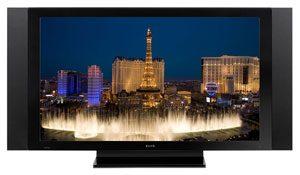
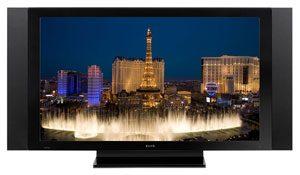
 Pioneer's 2007 line of KURO plasmas drew rave reviews. The new 2008 models are even better, as they are capable of rendering an even deeper black. The 2008 line includes two new top-shelf Elite HDTVs, at 50- and 60-inch screen sizes. The $5,000 PRO-111FD has a 50-inch screen size and a 1920 x 1080 resolution. This plasma HDTV has a healthy connection panel that includes four HDMI, one component video, and one PC input, as well as one RF input to access the internal ATSC, NTSC and Clear-QAM tuners. It lacks the CableCARD slot and second RF input found on last year's model. The HDMI inputs accept both 1080p/60 and 1080p/24, and one is located on the side panel for easy access. Picture-in-picture functionality is available, but last year's TV Guide on Screen program guide is missing, probably because the CableCARD slot has been omitted. This TV features Pioneer's Home Media Gallery. You can easily play digital movies, music and photos via the side-panel USB port, or add the TV to your home network via the back-panel Ethernet port and stream digital media from a PC or DLNA-certified media server.
Additional Resources
• Read more plasma HDTV reviews from HomeTheaterReview.com's staff.
• Find a Blu-ray player to get the most out of your KURO.
The PRO-111FD offers a ton of picture adjustments, presented this year in a redesigned onscreen menu. The list begins with seven picture modes, including a newly revised Optimum picture mode that (in conjunction with light and color sensors on the front panel) can automatically adjust the picture to suit your viewing conditions. There are six color-temperature options, including a manual mode that lets you precisely adjust the white balance. In addition to gamma and advanced noise-reduction controls, Pioneer includes two color-space options (one more vivid, one more natural), plus a color management system to precisely adjust the six color points.
Pioneer also offers three different ways to convert 24p film sources for output on this display: the Standard mode applies traditional 3:2 to convert 24fps film to 30fps video; the Advance mode outputs 24fps to 72fps for a smoother, less juddery presentation; and the Smooth mode appears to do frame interpolation to present even smoother movement. Several features are available help prevent or counteract image retention, a common plasma concern. There are nine total aspect-ratio options for HD and SD sources, including a Dot by Dot mode to view 1080i / 1080p sources with no overscan.
Read about the high points and the low points of the PRO-111FD plasma on Page 2.
This year's 50-inch Elite panel is even thinner than last year's, measuring three-and-seven-tenths inches deep. It sports detachable, side-mounted speakers, so if you plan to use an external audio system, you can remove the speakers to get an even smaller profile. If you use the included speakers, the back panel includes a subwoofer output to send bass information to an external subwoofer. Treble, bass and balance controls are available, and SRS WOW audio processing is also included.
High Points
• This year's KURO models offer even deeper black levels than last year's models while still retaining good light output, creating an outstanding overall contrast that makes the image look very rich and three-dimensional.
• This year's models also offer better color and processing. Both HD and SD images look great.
• You have two options for reducing film judder in 1080p/24 Blu-ray content: the Advance 72fps film mode provides more natural movement, while the Smooth mode produces more video-like motion.
• The Home Media Gallery is a nice perk.
Low Points
• The inclusion of only one component video input means that, if you have a lot of older sources, you'll need to add an external component video switcher.
• This year's model lacks the CableCARD slot and TV Guide on Screen program guide, if that really matters to anyone any more.
Conclusion
Pioneer is still the company to beat in terms of flat-panel performance. The Elite KURO PRO-111FD produces a gorgeous image, offers ample picture adjustments and HDMI inputs, and adds some nice digital-media features to boot. All of this functionality does not come cheap; at $5,000, the PRO-111FD is priced much higher than most 50-inch 1080p panels. But, if you want the best, look no further.
Additional Resources
• Read more plasma HDTV reviews from HomeTheaterReview.com's staff.
• Find a Blu-ray player to get the most out of your KURO.
