
Terry London has always had a great passion for music, especially jazz, and has amassed a collection of over 7,000 CDs covering the history of this uniquely American art form. Even in his teenage years, Terry developed a passion for auditioning different systems and components to see if they could come anywhere close to the sound of live music, and has for the last forty years had great fun and pleasure chasing this illusion in his two-channel home system.
Terry is a practitioner of Rational Emotive Behavior Therapy by day, and runs the Chicago Institute for REBT. He has also authored nine books on this of type psychotherapy and education.
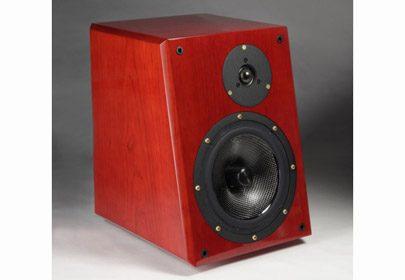
One of my favorite  floor-standing speakers, regardless of price, is the Reference 3A Grand Veena. I was quite interested to see if Divergent Technologies, the parent company that directs the operations of Reference 3A, could bring the stellar performance of its most costly floor-stander to its stand-mount reference, the MM deCapo-I, which retails for $2,995 in a standard finish.
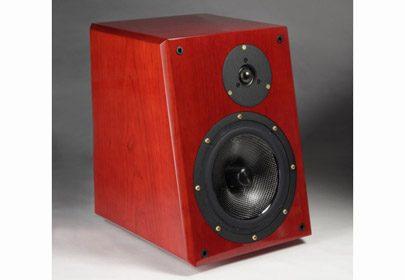
The MM deCapo-i measures 15 inches tall by 11 inches wide and 13 inches deep. Each speaker weighs 29 pounds and has a frequency range of 42Hz to 20KHz. The stated sensitivity is 92dB, with an impedance of eight ohms. I already had a pair of Reference 3A speaker stands, so the MM deCapo-is were set up on them for the review. The placement in my room that yielded the optimum performance had the MM deCapo-is six feet apart, aimed straight ahead, with the speakers two-and-a-half feet off of the front wall to allow their rear ports to breathe.
One of the great aspects of the performance of the MM deCapo-i became clear when I was listening to Franz Liszt's "Les Preludes, Symphonic Poem No.3" (Telarc). Not only did it display a large and deep soundstage with precise layering of the individual players, but it also gave a sense of the hall ambience in which the piece was recorded. The MM deCapo-i is very transparent, which gives you a totally open view of the music.
As I was enjoying the great alto sax of Lou Donaldson in his version of "Star Dust" with a big band arrangement (Blue Note), two other virtues of the MM deCapo-i clearly were on display. First, it produced natural and accurate timbres for all the band members' instruments. Second, even on the loudest passages, this speaker easily reproduced the macro dynamics and the power of this big band music.
I always use at least one vocal to measure a speaker's ability to convey the correct timbres and little details in a singer's voice. I also want to see how well the speakers can deliver emotions and feelings that the artist is trying to convey through his or her voice. The MM deCapo-i on Nancy King's beautiful rendition of the song "There's a Small Hotel" (MaxJazz), with Fred Hersch playing the piano, not only gave all the fine details in both their performances, but it also passed on the heartrending message in a very clear fashion.
Read about the high points and low points of the MM deCapo-i on Page 2.
High Points
• The MM deCapo-i is built to a very high standard, using new and innovative parts, such as the vortex device in its carbon midrange/woofer driver.
• It offers reference-level sound staging and a very high level of transparency, which allow all the little details of the music to come out. Also, it can play at high levels without any break-up or distortion settling in.
• The MM deCapo-i is a very honest speaker, because anything you feed to it, you will hear. However, it is not an overly cool or analytical transducer, so it still allows the emotion or feelings in music to be experienced at a high level.
Low Points
• The MM deCapo-i is a relatively easy speaker to drive; however, you better have very high-quality upstream gear. With a speaker this good, you can hear the flaws of your electronics and sources if you don't have your ducks in a row.
• To get the MM deCapo-i to perform at its highest level, you must have very high-grade speaker stands. With lesser stands, you can lose some of the transparency that makes these speakers so special.
• The MM deCapo-i would be great to use in a home theater system, but don't skip the sub. You will need the bass reinforcement and should have an LFE channel in any good home theater setup.
Competition and Comparison
A couple of excellent speakers that would be good competitors in the price range of $3,000 are the Esoteric MG-10 valued at $2,800 and the Harbeth Hl-P3ES2 valued at $2,495. Both these speakers offer a high level of micro-details, excellent sound staging, and natural timbres. I believe that the MM deCapo-i has these wonderful sonic attributes at the same high level. In addition, the MM deCapo-i adds on the ability to play at higher dB levels and gives you more clarity to hear ambient cues in the music and the environment where it was recorded. For more on bookshelf speakers, please check out Home Theater Review's Bookshelf Speaker page.
Conclusion
The MM deCapo-i will bring great pleasure and enjoyment to any listener, regardless of the genre of music selected. If your preference mainly leans towards acoustic music, opera, and either big band or small group jazz, then you will find the MM deCapo-i to be a great addition to your sound system. The way the MM deCapo-i lets the music flow, with all the details creating the illusion of the space in which the music was played, is of reference level.
I highly recommend that you put the MM deCapo-i on your audition list if you think your gear is of high enough quality to get this reference-level two-way monitor to perform to its true potential.
